


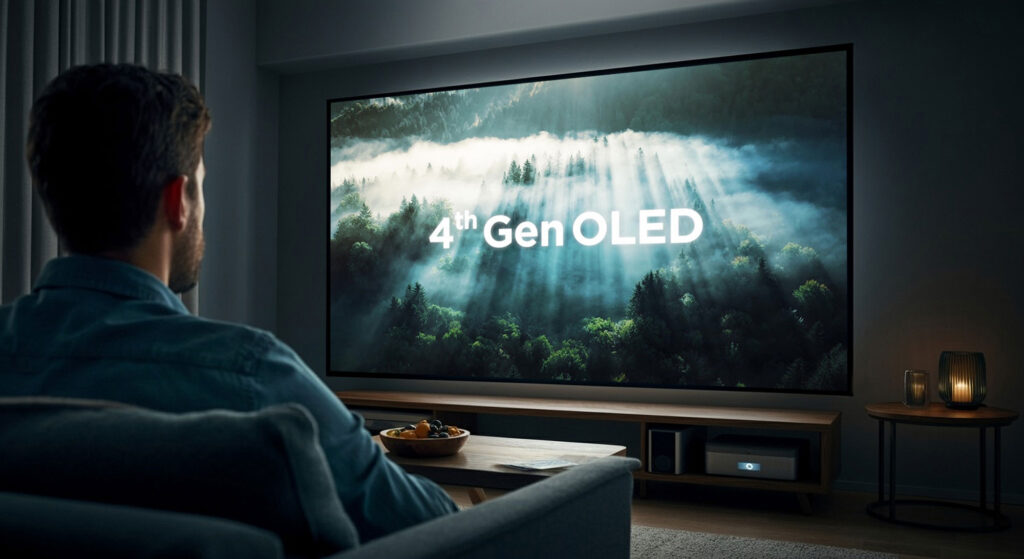
When LG Display unveiled fourth-generation OLED earlier this year, we knew it was something special. Boasting the company’s proprietary ‘Primary RGB Tandem’ technology, the latest OLED generation takes displays to new heights with industry-leading picture quality and brightness.
We are talking about brightness soaring as high as 4,000 nits alongside perfect blacks, achieving a clarity of contrast ratio that could hardly have been previously imagined. Fourth-generation OLED also comes equipped with ultra-low reflection technology that blocks 99% of internal and external light reflections – even in a living room in broad daylight! While a display’s color gamut and accuracy would be expected to fall in a bright viewing environment, this panel offers 100% color accuracy at 500 lux (a midday living room setting).
Yet, how does this all stand up to the scrutiny of some of the most discerning viewers in the world? Not only are Hollywood filmmakers known for their eye for detail, they also care deeply about whether the screen you watch their movies is able to show what they intended. So, what have they made of fourth-generation OLED? Let’s “head to Hollywood” to find out.
Hollywood expert experiences 4th-Gen OLED
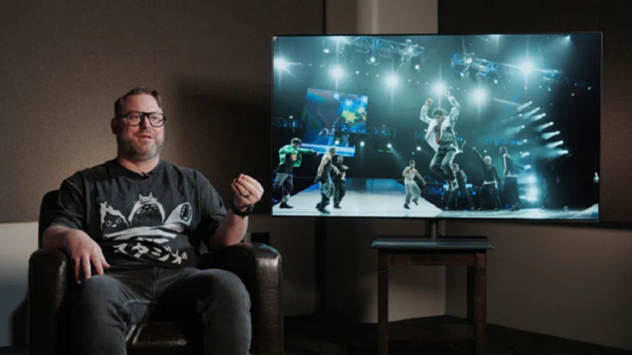
It is “incredible” and “a huge improvement,” declares veteran Hollywood colorist John Daro, who is renowned for his work on movies like “Kimi” and “Contagion.” The senior colorist at Water Tower Color recently addressed the question of how far OLED has come since the previous generation.
Filmmakers like Daro use a relatively small, 30-inch display known as a reference screen when producing a movie. During post-production, he will have various counterparts reviewing his work on other, larger screens – which must be able to show the content as visually intended.
“Achieving 100% color volume is so paramount because now you can actually have a very good representation on the larger consumer display” compared to the smaller reference display, Daro says, while also praising fourth-generation OLED’s “extra black level” even with reflections in the room.
From Hollywood to home cinemas
Knowing that home viewers can watch content at its intended quality standard comforts filmmakers like Daro, particularly as he appreciates the way that a fourth-generation OLED TV compensates for viewing conditions.
“Now when you’re at home, it truly is as it was intended. And that’s all we ever asked for, right? Please give me the same thing that we saw in the finishing suite. We want that at home,” Daro reflects.


LG Display has been taking “natural reality” seriously in its pursuit of picture quality excellence, including maintaining consistency across viewing environments. These efforts have been met, with global organizations such as UL Solutions and Intertek verifying fourth-generation OLED for Perfect Black, Perfect Color, and 100% Color Fidelity.
Moreover, as AI continues to enter so many elements of our lives – including the home cinema realm – fourth-generation OLED panels are optimized to support the demands of evolving AI TVs, both in terms of brigtness for upscaling and energy efficiency for rising power needs.
In addition, hours of film watching (or making) can add up in terms of eye strain and interfering with sleep due to the impact of blue light on circadian rhythms – but fourth-generation OLED panels are easier on the eyes, having been verified by UL Solutions for Low Blue Light as well as being Flicker-Free and Discomfort Glare Free.
Listening to filmmakers in search of a new display star
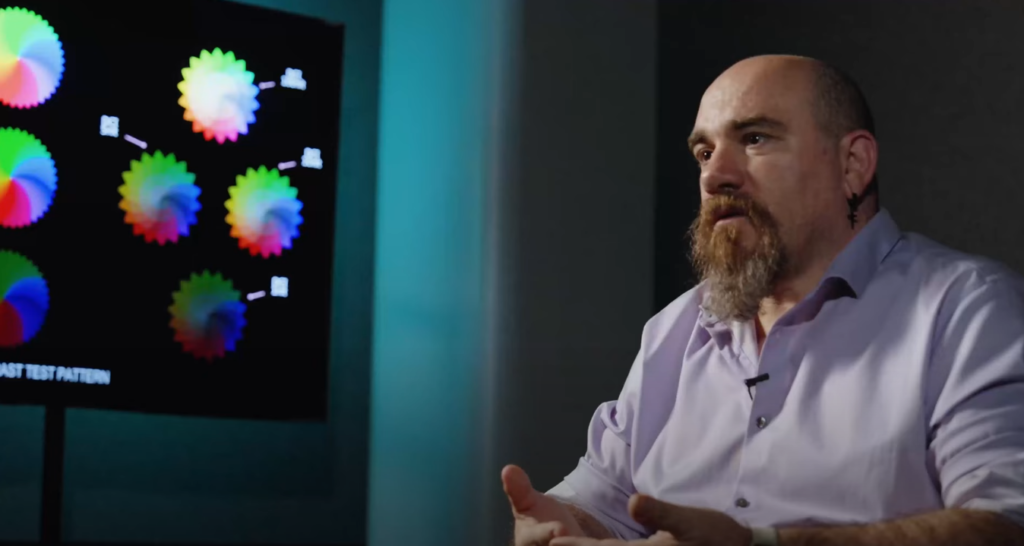
This is not the first time we have heard from Daro and other Hollywood experts. For example, we might recall listening to their voices during an interview published just last year.
“One thing that I really like about LG is they listen to the feedback of us, for the people that create content. I can see the direction LG is going, the continuous feedback, it’s what we want and what we want from a partner,” said Walter Volpatto, a professional Hollywood colorist.
Back then, Daro also reflected on the impact of OLED displays on his industry, saying they had already created a “paradigm shift” by opening up more options for filmmakers to work from home if needed. He left us with his hope for “a display that is like what we see.”
Fourth-generation OLED has taken a huge leap to achieve exactly that – to show scenes the way filmmakers intended – leading to an outpouring of praise from Hollywood as this technology promises to faithfully deliver the industry’s content to home cinema screens wherever, whenever!