


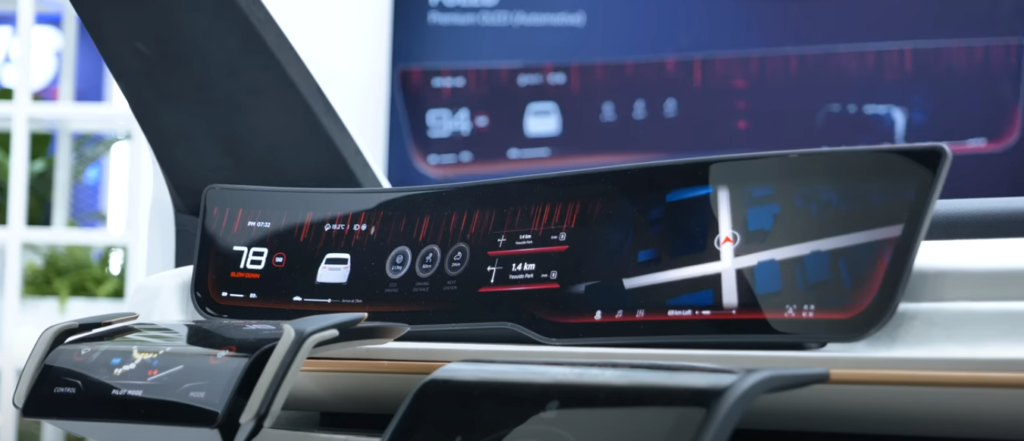
OLED is loved by users not only in TVs but also in gaming monitors and IT devices. Among the reasons for this are the incredible picture quality, outstanding performance, and variety of form factors. P-OLED uses flexible plastic as its substrate, offering lightweight and curved characteristics while maintaining high picture quality. Also referred to as Flexible OLED, P-OLED has been applied to automotive displays and is gaining attention as a rising star in the area of mobility. Today, let’s take a closer look at this automotive P-OLED.
Reasons why P-OLED is gaining attention in automotive display
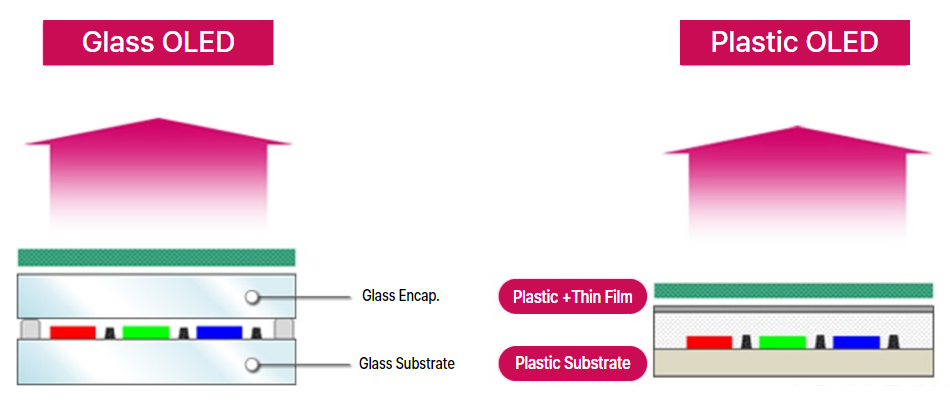
As you can see in the structural diagram above, P-OLED can be made thinner and lighter than OLEDs with glass substrates. This allows for driver-optimized designs. Since ergonomic design is especially important in autos, the versatility of P-OLED offers a major advantage. Thanks to its unique ability to accommodate various designs that follow the curves of a car’s dashboard, P-OLED stands out as an innovative display that is shaping the future of automotive interiors. Unlike displays with fragile glass substrates, plastic OLEDs are highly flexible when bent to a certain curvature. It goes without saying that the use of plastic instead of fragile glass offers clear advantages.
P-OLED combines the perfect picture quality and viewing angles made possible by OLED’s rich color reproduction and high contrast ratio with design flexibility and durability. For this reason, in terms of enabling more innovative designs, P-OLED is drawing increasing attention in the mobility market.