


LG Display has successfully secured a direct contract with a major global premium automaker for a new automotive display project. This represents a significant departure from the industry norm, where contracts were traditionally awarded only through Tier 1 automotive suppliers. It’s the result of relentless collaboration and challenge — a journey to turn the customer’s vision into reality. Let’s hear from five key players across product planning, sales, development, and manufacturing who brought this groundbreaking project to life.
Learning from Rejection:
Reapproaching the Real Customer Needs
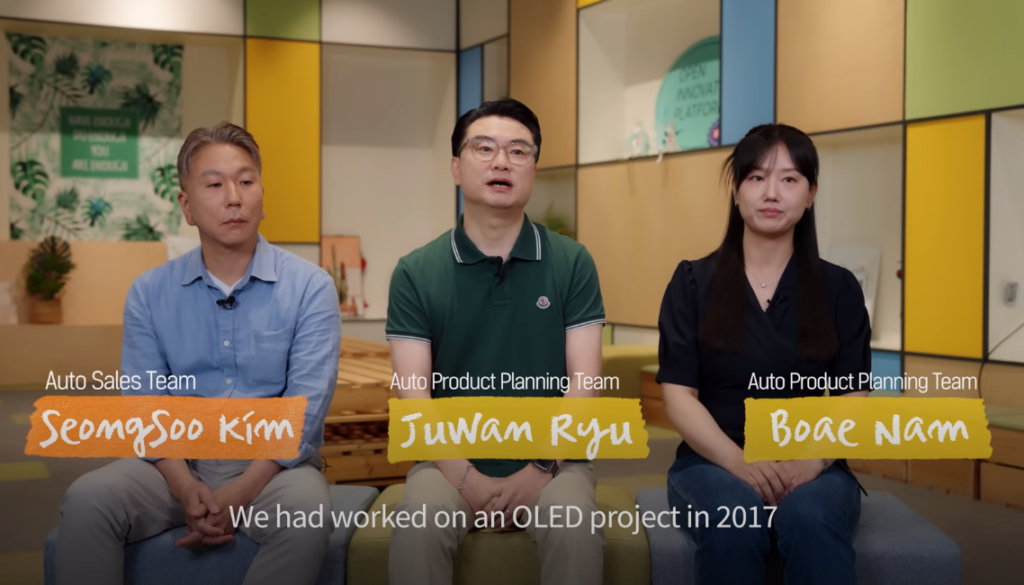
Q. This project first began eight years ago. How did it come about?
JuWan Ryu: In 2017, we proposed an OLED display to the customer, but failed to secure the deal. We were confident in our capabilities and ready to expand the market, but didn’t have the opportunity to prove it. That’s when I realized — unless we understand the customer’s true needs, we’ll never get a second chance.

Boae Nam: At the time, the customer ended up working with another company, but they faced difficulties meeting the high reliability standards required for automotive displays, and the project ultimately was not successful. Automotive displays must operate reliably in all kinds of environments, so the bar for reliability is extremely high.
In a way, that situation became an opportunity for us to make another proposal—this time grounded in our technological capabilities.
Q. What led you to try again?
SeongSoo Kim: It was to drive the mainstream adoption of OLED technology. We believed our company had already achieved a certain level of differentiation in OLED, and we saw this customer as playing a key role in making OLED the industry standard.
Q. After the initial setback, what was the most important focus when making the proposal again?
JuWan Ryu: The top priority was addressing the customer’s concerns about the reliability of OLED displays for automotive use. To that end, we proposed the operation of a Display Integration Study Team (DIST) to the customer in 2022. Through this joint collaboration on advanced technologies, we were able to directly demonstrate the reliability of automotive OLED and the design flexibility enabled by P-OLED, which helped alleviate the customer’s concerns.
Q. How did you build trust with the customer?
Boae Nam: We didn’t just say, “This is possible.” We followed a “Bad News First” approach — transparently communicating what wouldn’t work, and how we could solve it. We even identified potential risks the customer hadn’t noticed. That honesty laid the groundwork for trust and partnership.
A “never-before-seen” kind of display
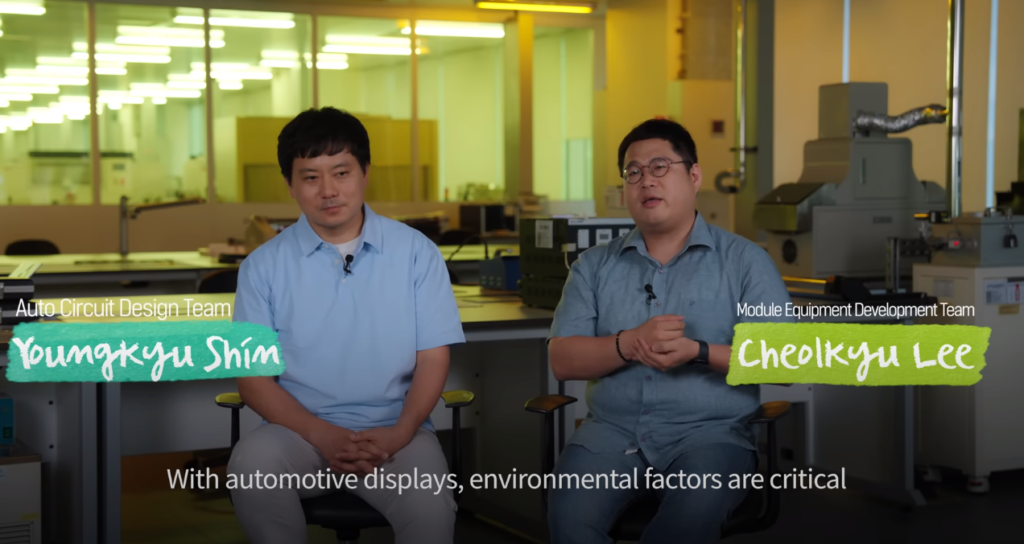
Q. We heard that the automotive OLED display used in this project is exceptional in terms of both technology and design.
YoungKyu Shin: While we can’t share the detailed design, it truly is a “never-before-seen” kind of display. From a development perspective, it felt overwhelming at first. We even wondered, “Do we really need to go this far for an automotive display?”
CheolKyu Lee: From the manufacturing side as well, we couldn’t rely on conventional processes, so we put a lot of effort into developing entirely new methods. It felt like we were updating every step from the ground up.
YoungKyu Shin: There were so many elements that required fine-tuning, we even held on-site workshops at the customer’s location. We lived each day like a week, working tirelessly to optimize every aspect of the product. About two weeks into the workshop, we finally began to see things take shape—and that’s when we felt, “This is really going to work!”
Success Made Possible by a One-Team Spirit
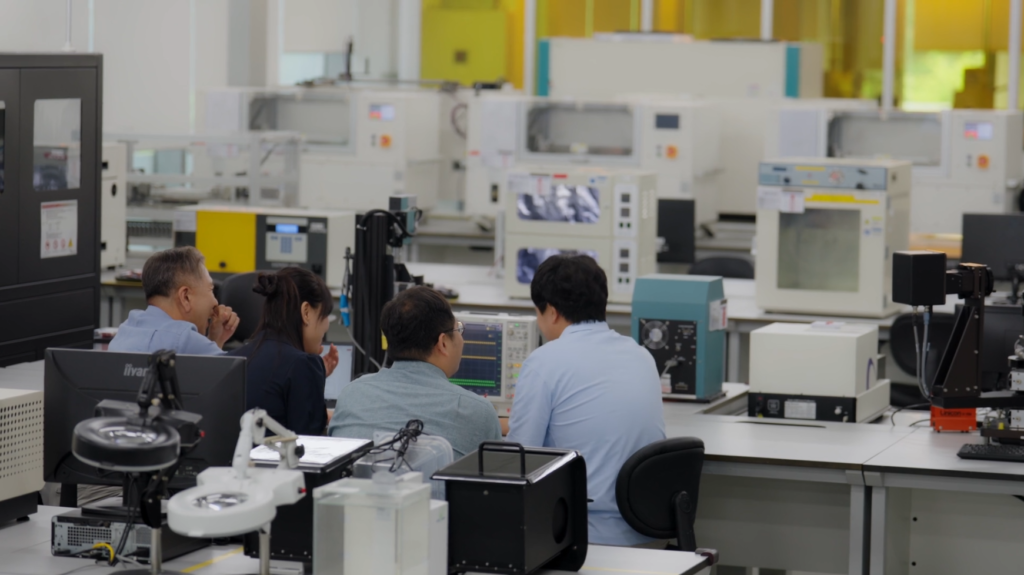
Q. Despite the complexity of the project, what do you think was the biggest factor behind its success?
SeongSoo Kim: It was thanks to our “one-team spirit.” Members across all departments—development, product planning, sales, and manufacturing—came together and operated as a single, well-aligned team. This was especially true during the on-site workshops, where we had to conduct rapid daily reviews and make decisions quickly.
CheolKyu Lee: I believe the key was how seamlessly we communicated as one team. I met many of the team members for the first time through this project, but from the very beginning, everyone openly shared their knowledge and insights without hesitation.
JuWan Ryu: What made that one-team approach possible was our shared sense of purpose. This project wasn’t viewed as a win for a single team, but as a collective goal for LG Display—something we all needed to accomplish together. That shared understanding became the foundation for our collaboration.
Turning Failure into Value:
Honored with the LG Customer Satisfaction Award
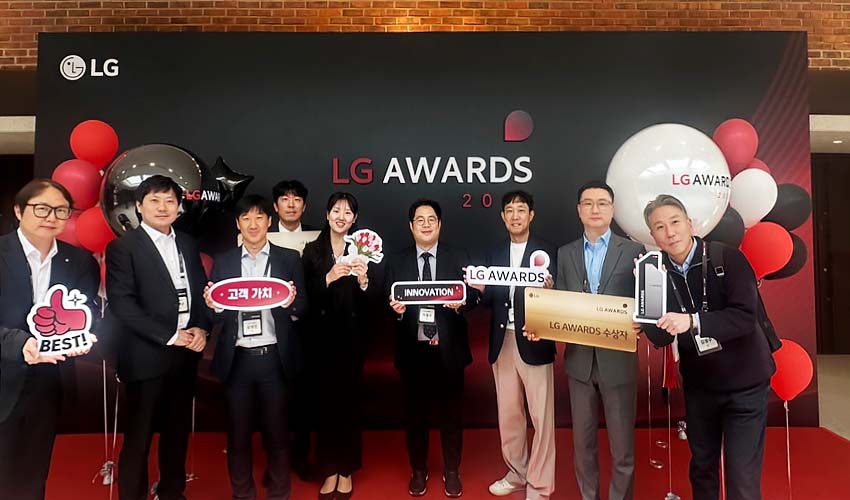
The success of this project is especially meaningful because it was achieved by all team members coming together as one team, overcoming a past failure to create a new milestone. As a result, the project earned ‘Customer Satisfaction Award’ from *LG Awards, proving the impact of customer-centered innovation.
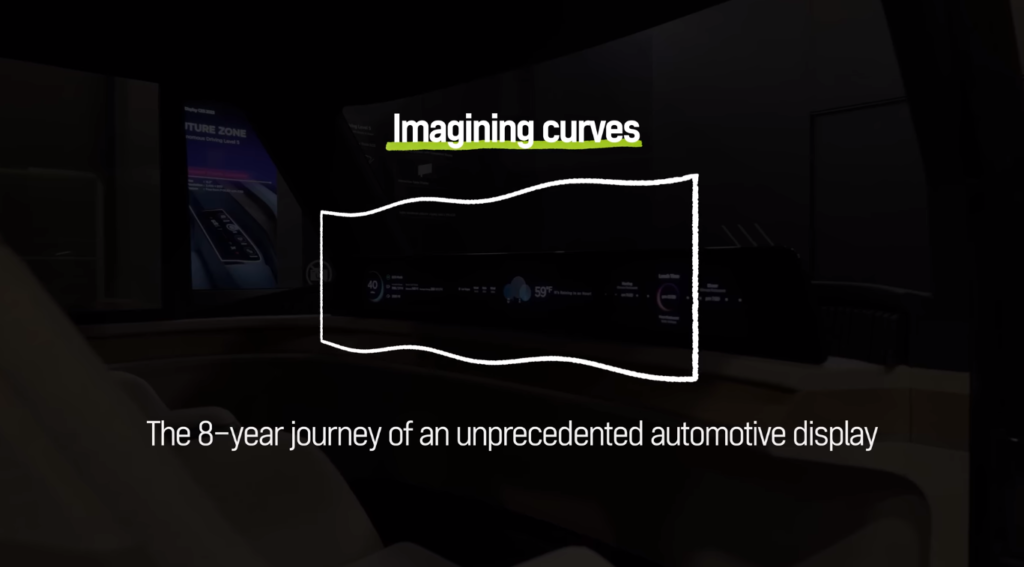
And LG Display’s journey to make imagination real continues. To learn more about LG Display’s story, check out the video below!
*LG Awards: A group-wide LG recognition program that honors exceptional cases of differentiated customer value.